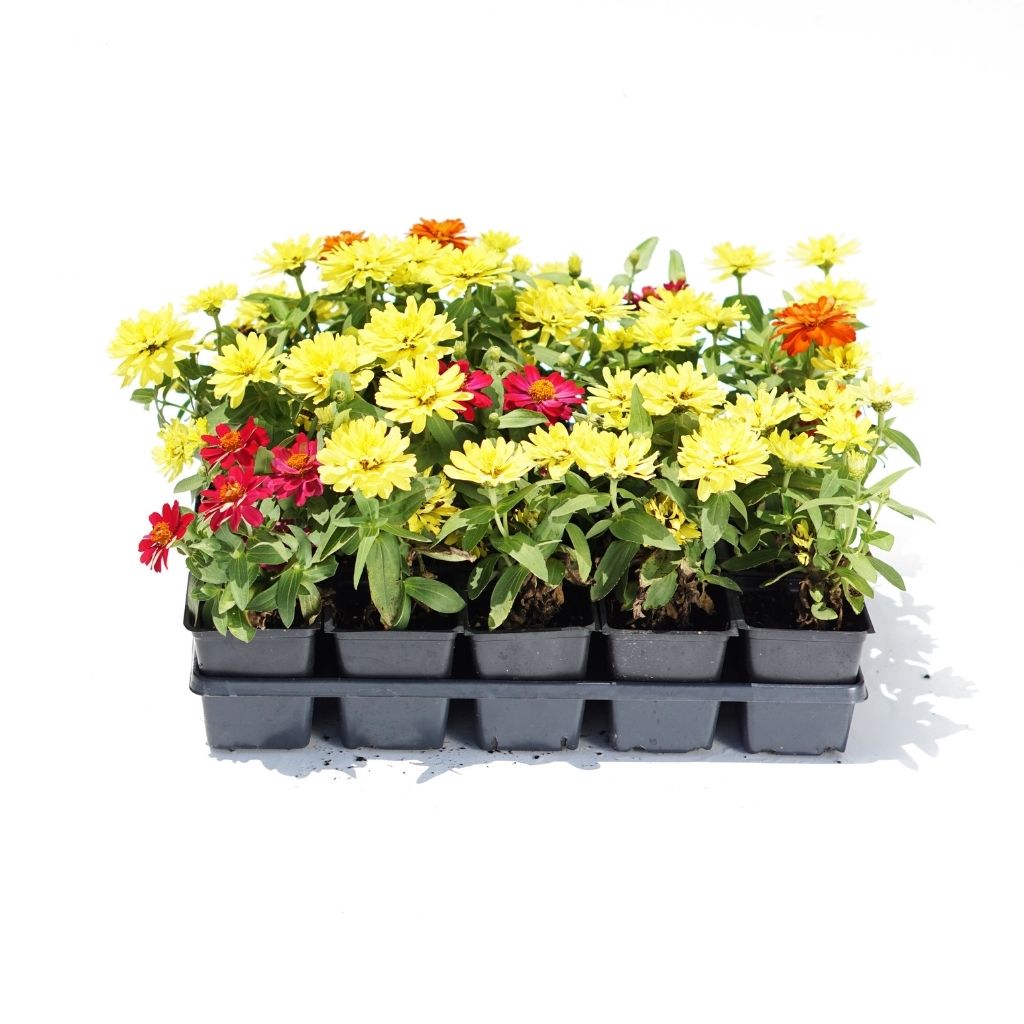

About Zinnia
Zinnia is a warm-season flowering annual known for its bright colors, long bloom period, heat tolerance, fast growth, and strong pollinator value.
Zinnias are widely used in seasonal color beds, pollinator gardens, cottage-style landscapes, commercial installations, mass plantings, and cut-flower gardens.
Depending on cultivar, flowers may appear in shades of red, pink, orange, yellow, white, purple, coral, salmon, and multi-color combinations.
Outdoor Warehouse Supply stocks Zinnia in flats during the spring and summer growing seasons, with exact cultivars, colors, and quantities depending on current inventory.
| Plant Details | Specifications |
|---|---|
| Common Name | Zinnia |
| Botanical Group | Zinnia spp. and cultivars |
| Plant Type | Warm-season flowering annual |
| Stocked Form | Flats |
| Primary Availability | Spring and summer |
| Typical Mature Height | Approximately 8 inches to 4 feet depending on cultivar |
| Typical Mature Spread | Approximately 8–24 inches |
| Spacing | Typically 8–18 inches apart depending on cultivar |
| Growth Habit | Upright, compact, mounding, or branching depending on variety |
| Sun Exposure | Full sun |
| Water Requirements | Moderate |
| Soil Preference | Well-drained soil |
| Flower Colors | Red, pink, orange, yellow, white, purple, coral, salmon, and mixed colors |
| Bloom Season | Late spring through summer and into fall |
| Pollinator Value | Excellent for butterflies, bees, and other pollinators |
| Common Uses | Seasonal color beds, pollinator gardens, mass plantings, borders, commercial landscapes, and cut-flower gardens |
Exact mature size, flower type, and color depend on the specific Zinnia cultivar.
Common Names Associated with Zinnia
Customers may search for these plants under names such as:
- Zinnia
- Zinnia Flower
- Zinnia Plant
- Annual Zinnia
- Garden Zinnia
- Color Zinnia
- Zinnia Flats
The botanical genus is Zinnia.
Because Outdoor Warehouse Supply carries assorted varieties rather than one confirmed cultivar, Zinnia spp. and cultivars is the most accurate botanical listing.
Growth Habit & Mature Size
Zinnia size varies widely depending on cultivar.
Compact bedding selections may remain around 8–12 inches tall, while taller garden and cut-flower types may reach 2–4 feet.
Growth forms may include:
- Compact and mounding
- Upright
- Bushy
- Branched
- Taller cut-flower forms
For flat-grown seasonal color, many landscape cultivars stay relatively compact and are designed to create fast, consistent coverage.
Plant Spacing & Common Planting Patterns
Spacing approximately 8–18 inches apart works well for most Zinnia installations, depending on the mature size of the cultivar.
Compact varieties can be planted closer together for quick seasonal fill, while larger varieties need more room.
Common planting uses include:
- Seasonal color beds
- Pollinator gardens
- Commercial entrances
- HOA landscapes
- Apartment communities
- Residential borders
- Cottage gardens
- Mass plantings
- Cut-flower gardens
Because Zinnias are sold in flats, they are especially useful for larger installations requiring repeated plants and consistent seasonal color.
Sun, Soil & Water Requirements
Zinnias perform best in full sun.
Strong sunlight encourages:
- Heavier flowering
- Stronger stems
- Better plant form
- Reduced stretching
They prefer well-drained soil and moderate irrigation.
Regular watering is important during establishment and prolonged hot weather, but overwatering should be avoided.
Good air circulation is also helpful, particularly in humid conditions.
Are Zinnias Evergreen or Deciduous?
Zinnias are warm-season annuals.
They complete their life cycle within one growing season and are not evergreen.
Cold weather and frost typically end the growing season in Dallas–Fort Worth.
They should therefore be treated as seasonal color rather than permanent landscape plants.
Growth Rate & Seasonal Performance
Zinnias generally grow quickly during warm weather.
Plants installed in spring can establish rapidly and begin producing repeated flowers through summer.
Healthy plants may continue blooming into fall until colder weather arrives.
Their quick growth makes them particularly useful for seasonal beds that need fast visual impact.
Flowers & Seasonal Interest
Zinnias are best known for their wide range of bright flower colors and forms.
Depending on cultivar, flowers may be:
- Single
- Semi-double
- Double
- Rounded
- Daisy-like
- Pom-pom style
Colors may include:
- Red
- Pink
- Orange
- Yellow
- White
- Purple
- Coral
- Salmon
- Mixed and bi-colored combinations
This variety makes Zinnias one of the most flexible annuals for seasonal color design.
Zinnias for Pollinator Gardens
Zinnias are excellent pollinator plants.
Their flowers can attract:
- Butterflies
- Bees
- Other beneficial pollinating insects
Single and semi-double flower forms are often especially accessible to pollinators.
Zinnias pair well with:
- Pentas
- Vinca
- Coreopsis
- Salvia
- Echinacea
- Gaillardia
- Rudbeckia
Zinnias for Mass Seasonal Color
Zinnias work especially well in large seasonal color installations.
They can be used in:
- Commercial properties
- HOA entrances
- Apartment landscapes
- Retail centers
- Office properties
- Residential communities
- Large flower beds
- Municipal or public landscape beds
Selling them in flats allows contractors and landscapers to install large quantities efficiently.
Pruning & Seasonal Care
Zinnias generally benefit from light maintenance throughout the growing season.
Removing spent flowers can encourage continued blooming and keep plants looking cleaner.
Taller varieties may also benefit from light pinching early in growth to encourage branching.
Good spacing and airflow help reduce foliage disease pressure.
Pros & Cons of Zinnias
| Pros | Cons |
|---|---|
| Bright, colorful flowers | Not winter-hardy |
| Long warm-season bloom period | Requires full sun for best flowering |
| Excellent pollinator value | Can develop foliar disease in humid conditions |
| Fast seasonal growth | Poor drainage can cause decline |
| Excellent for mass plantings | Requires seasonal replacement |
| Many colors and flower forms available | Exact cultivars vary with inventory |
| Sold in flats for larger installations | Deadheading improves appearance |
| Strong summer performance | Cold weather ends the growing season |
Zinnias in Dallas–Fort Worth Landscapes
Zinnias are well suited to Dallas–Fort Worth landscapes because they handle heat, full sun, and long summer growing conditions very well.
They are especially useful in seasonal color beds, pollinator gardens, apartment and HOA landscapes, commercial properties, and residential borders.
The main local considerations are full sun, proper drainage, and adequate airflow.
Outdoor Warehouse Supply stocks Zinnia flats during the spring and summer growing seasons.
Exact colors, cultivars, and quantities vary depending on current inventory.
Customers can contact our Plano or Lewisville sales staff for current availability.
Industry Contractor & Wholesale Pricing
Outdoor Warehouse Supply offers industry contractor and wholesale pricing for qualifying landscape professionals, builders, property managers, commercial customers, and other industry buyers.
Zinnia flats are especially useful for contractors installing seasonal color beds and large commercial landscape projects.
Contractors can source Zinnias alongside Pentas, Vinca, Coleus, other annuals, flowering perennials, shrubs, soils, mulch, decorative stone, and other landscape materials throughout Dallas–Fort Worth and North Texas.
Contact our Plano or Lewisville locations for current flat quantities, available colors, and contractor pricing.
Frequently Asked Questions
How does Outdoor Warehouse Supply sell Zinnias?
Outdoor Warehouse Supply sells Zinnias in flats.
When does Outdoor Warehouse Supply carry Zinnias?
Zinnias are primarily stocked during the spring and summer growing seasons.
What is the botanical name for Zinnia?
The botanical genus is Zinnia.
Because multiple cultivars may be stocked, this product is best listed as Zinnia spp. and cultivars.
How big do Zinnias get?
Depending on cultivar, Zinnias may range from approximately 8 inches to 4 feet tall.
Many landscape bedding selections remain significantly more compact.
How far apart should Zinnias be planted?
Approximately 8–18 inches apart is a useful range.
Final spacing should match the mature size of the specific cultivar.
Do Zinnias need full sun?
Yes.
Zinnias perform best in full sun and generally flower more heavily with strong sunlight.
Are Zinnias drought tolerant?
Once established, Zinnias can tolerate short dry periods, but regular irrigation during prolonged North Texas summer heat usually provides better flowering and plant quality.
What colors do Zinnias bloom?
Zinnias may bloom in red, pink, orange, yellow, white, purple, coral, salmon, and mixed colors.
When do Zinnias bloom?
Zinnias typically flower from late spring through summer and into fall until cold weather arrives.
Do Zinnias attract butterflies?
Yes.
Zinnias are well known for attracting butterflies, bees, and other pollinators.
Are Zinnias annuals or perennials?
Zinnias are generally grown as warm-season annuals.
Should Zinnias be deadheaded?
Yes.
Removing spent flowers can encourage continued blooming and maintain a cleaner appearance.
Are Zinnias good for commercial landscaping?
Yes.
Their fast growth, strong color, flat availability, and warm-season performance make them especially useful for commercial seasonal color installations.
Are Zinnias good for North Texas?
Yes.
Zinnias perform well in Dallas–Fort Worth when planted in full sun with good drainage, appropriate irrigation, and adequate airflow.