

About Wintergreen Boxwood
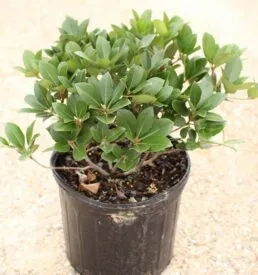
Wintergreen Boxwood (Buxus sinica var. insularis ‘Wintergreen’) is a compact evergreen shrub valued for its dense green foliage, naturally rounded growth habit, and ability to maintain attractive color throughout the year. Its small leaves and manageable mature size make it particularly useful for structured landscapes, foundation plantings, decorative borders, and neatly maintained evergreen hedges.
Unlike larger screening shrubs, Wintergreen Boxwood provides a relatively compact evergreen appearance that can be maintained through selective pruning and shaping. Its foliage creates a consistent green backdrop for seasonal flowers, ornamental grasses, decorative stone, and other landscape materials.
One of its distinguishing characteristics is its ability to retain green foliage during winter, with less seasonal bronzing than many other boxwood selections. This makes it attractive for customers who want consistent landscape color even when surrounding deciduous plants become dormant.
Wintergreen Boxwood is particularly effective in traditional, contemporary, and formal landscape designs where year-round structure and manageable growth are important.
| Plant Details | Specifications |
|---|---|
| Botanical Name | Buxus sinica var. insularis ‘Wintergreen’ |
| Common Names | Wintergreen Boxwood, Wintergreen Korean Boxwood, Korean Boxwood |
| Plant Family | Buxaceae |
| Plant Type | Broadleaf evergreen shrub |
| USDA Hardiness Zones | Generally Zones 4–9 |
| Typical Mature Height | Approximately 2–4 feet |
| Typical Mature Spread | Approximately 3–5 feet |
| Suggested Hedge Spacing | Approximately 2–3 feet on center, depending on desired density |
| Growth Habit | Dense, rounded, broadly mounded |
| Growth Rate | Slow to moderate |
| Sun Exposure | Full sun to partial shade |
| Water Requirements | Moderate; consistent moisture during establishment |
| Soil Preference | Well-drained soil; adaptable to slightly acidic or alkaline conditions |
| Foliage | Small, dense green evergreen leaves |
| Flowering | Small, inconspicuous greenish-yellow spring flowers |
| Seasonal Interest | Year-round foliage and improved winter color retention |
| Life Expectancy | Long-lived perennial shrub under suitable growing conditions |
| Common Uses | Low hedges, foundation plantings, borders, formal gardens, ornamental groupings, and containers |
These specifications represent typical characteristics of Wintergreen Boxwood. Actual dimensions and growth depend on soil conditions, climate, sunlight, pruning practices, and overall plant health.
The Missouri Botanical Garden identifies Wintergreen as a compact Korean boxwood selection with a mature height of approximately 2–4 feet and a spread of approximately 3–5 feet.
Common Names Associated with Wintergreen Boxwood
Wintergreen Boxwood is commonly referred to as Wintergreen Korean Boxwood, Korean Wintergreen Boxwood, and Wintergreen Box.
Its botanical name is Buxus sinica var. insularis ‘Wintergreen’.
Older horticultural references may identify this plant as Buxus microphylla var. koreana ‘Wintergreen’.
The name Korean Boxwood can also refer to other plants within the same botanical group, making the cultivar name particularly useful when customers are searching for Wintergreen specifically.
Growth Habit & Mature Size
Wintergreen Boxwood develops a dense, branching structure with small green leaves and a naturally rounded appearance.
Unlike large evergreen shrubs that develop considerable height, Wintergreen maintains a relatively compact mature form.
Under favorable conditions, it commonly reaches approximately 2–4 feet tall and 3–5 feet wide.
Its natural growth habit is broadly mounded, although routine pruning can maintain a more structured appearance.
This makes Wintergreen Boxwood particularly useful for low hedges, formal garden borders, foundation plantings, and ornamental groupings.
Customers should account for its potential mature width rather than assuming it will remain the same size as the nursery container in which it was purchased.
Plant Spacing & Common Planting Patterns
Wintergreen Boxwoods can be planted individually or arranged in repeating patterns to create consistent evergreen structure.
For many low-hedge applications, approximately 2–3 feet between plants provides a reasonable starting point.
Closer spacing can create a continuous hedge sooner, but plants may require more frequent pruning and ongoing maintenance as they mature.
Wider spacing allows individual shrubs to develop their naturally rounded form.
Wintergreen Boxwoods are particularly useful for foundation plantings, formal borders, symmetrical entry landscapes, decorative hedges, ornamental groupings, and appropriately sized containers.
When planting near buildings, sidewalks, or other hardscape features, sufficient room should be allowed for mature growth and maintenance access.
Sun, Soil & Water Requirements
Wintergreen Boxwood performs well in full sun to partial shade, although the ideal amount of sunlight depends on local growing conditions.
Throughout Dallas–Fort Worth, some protection from intense afternoon sunlight can help reduce heat-related stress during particularly hot summer periods.
The plant prefers well-drained soil and consistent moisture while becoming established.
Its shallow root system benefits from an appropriate layer of mulch, which helps regulate soil temperature and retain moisture.
Avoid excessive watering or planting in areas where water remains standing for extended periods. Poor drainage can contribute to root disease and declining plant health.
Wintergreen Boxwood tolerates a range of soil conditions, including slightly alkaline soils, making it suitable for appropriately prepared North Texas planting areas.
The Chicago Botanic Garden notes the cultivar’s tolerance of sunlight and alkaline soil, while Missouri Botanical Garden recommends well-drained soil and moderate moisture.
Is Wintergreen Boxwood Evergreen or Deciduous?
Wintergreen Boxwood is a broadleaf evergreen shrub, maintaining foliage throughout the year.
Unlike deciduous shrubs that lose their leaves during autumn, Wintergreen generally retains its compact green appearance through winter.
One of the cultivar’s notable characteristics is its improved resistance to winter bronzing.
Winter bronzing occurs when evergreen foliage develops bronze, yellowish, or brownish coloration in response to cold temperatures and environmental stress.
Although Wintergreen is less susceptible to pronounced winter discoloration than certain other boxwoods, some seasonal color changes can still occur under challenging conditions.
Growth Rate & Life Expectancy
Wintergreen Boxwood generally has a slow to moderate growth rate.
Unlike rapidly growing privacy shrubs, its relatively restrained growth helps it maintain a manageable size in formal landscape designs.
Its rate of development depends on soil quality, irrigation, sunlight, growing conditions, and pruning.
As a perennial evergreen shrub, Wintergreen Boxwood can remain a permanent landscape feature for many years when properly maintained.
Its actual lifespan cannot be guaranteed because long-term performance depends heavily on growing conditions, disease prevention, and ongoing care.
Wintergreen Boxwood for Low Hedges & Foundation Plantings
One of Wintergreen Boxwood’s most useful applications is creating a consistent evergreen border.
Its small leaves and naturally dense branching help produce defined planting arrangements without the large mature dimensions associated with taller screening shrubs.
It can be used to frame walkways, separate planting beds, complement building foundations, or provide year-round structure around seasonal flowers.
Because Wintergreen responds well to pruning, it can also be maintained in rounded or more geometric shapes.
For healthier long-term growth, excessive shearing should be avoided, and occasional selective thinning can improve airflow within dense shrubs.
Seasonal Interest & Ornamental Characteristics
Wintergreen Boxwood is grown primarily for its foliage rather than its flowers.
Its small green leaves provide consistent landscape color throughout the year and can create attractive contrast against flowering annuals, ornamental grasses, natural stone, and decorative mulch.
During spring, Wintergreen may produce small greenish-yellow flowers.
These flowers are generally inconspicuous, so customers should select Wintergreen primarily for its evergreen foliage and structured growth rather than for a colorful flowering display.
Pros & Cons of Wintergreen Boxwood
Pros
Year-round foliage: Wintergreen maintains an evergreen appearance throughout the year.
Improved winter color: It is less prone to pronounced winter bronzing than some other boxwood selections.
Compact growth: Its relatively manageable mature size makes it useful for low hedges and foundation plantings.
Pruning tolerance: Wintergreen responds well to appropriate shaping and maintenance.
Landscape versatility: It works in formal gardens, ornamental borders, residential landscapes, and commercial planting areas.
Cold hardiness: Its Korean boxwood heritage provides good tolerance of winter temperatures.
Cons
Slow establishment of large hedges: Its relatively restrained growth means customers may need patience when establishing continuous borders.
Summer heat stress: Intense afternoon sunlight and inadequate soil moisture can affect foliage quality in North Texas.
Drainage sensitivity: Poorly drained soil can contribute to root rot and declining plant health.
Pest susceptibility: Boxwoods can experience problems involving leafminers, mites, and other pests.
Disease concerns: Boxwood blight and other fungal diseases should be considered when selecting and maintaining boxwood shrubs.
Regular shaping: Formal hedges and carefully maintained geometric plantings may require periodic pruning.
Pet safety: Boxwood plant material is toxic if ingested and should be considered carefully in landscapes where pets or children may chew plants.
Missouri Botanical Garden identifies several potential disease and pest concerns affecting boxwoods, including root rot and insect damage.
Wintergreen Boxwood in Dallas–Fort Worth Landscapes
Wintergreen Boxwood is an option for North Texas landscapes where customers want compact evergreen shrubs, structured planting patterns, and consistent year-round foliage.
Its tolerance of pruning makes it useful for residential foundation plantings, commercial entrances, formal garden borders, low hedges, and decorative landscape arrangements.
However, Dallas–Fort Worth’s intense summer heat makes appropriate planting location and irrigation important.
Locations receiving morning sunlight with some afternoon protection can be beneficial, particularly where reflected heat from nearby pavement or buildings creates additional stress.
Outdoor Warehouse Supply carries Wintergreen Boxwoods for residential and commercial landscaping projects throughout Dallas–Fort Worth and North Texas.
Industry Contractor & Wholesale Pricing
Outdoor Warehouse Supply offers industry contractor and wholesale pricing for qualifying landscape professionals, commercial landscapers, builders, property managers, and other trade customers.
Contractors can source Wintergreen Boxwoods alongside evergreen shrubs, seasonal flowers, ornamental trees, soils, mulch, decorative stone, and other landscape materials for residential and commercial projects throughout Dallas–Fort Worth and North Texas.
Contact our Plano or Lewisville locations for current container sizes, plant availability, and contractor pricing.
Frequently Asked Questions
How big do Wintergreen Boxwoods get?
Wintergreen Boxwoods typically reach approximately 2–4 feet tall and 3–5 feet wide.
Their actual mature dimensions depend on growing conditions and pruning practices.
Are Wintergreen Boxwoods evergreen?
Yes. Wintergreen Boxwood is a broadleaf evergreen shrub that retains its foliage throughout the year.
It is also recognized for maintaining green foliage through winter with less bronzing than certain other boxwood varieties.
How far apart should Wintergreen Boxwoods be planted?
For many low-hedge applications, approximately 2–3 feet apart provides a reasonable starting point.
Final spacing should consider the desired appearance, mature width, and maintenance requirements.
Can Wintergreen Boxwoods handle full sun in Texas?
Wintergreen Boxwoods tolerate full sun, but intense afternoon sunlight and prolonged summer heat can cause stress.
In North Texas, planting locations that provide some afternoon protection may improve their appearance and reduce watering demands.
Are Wintergreen Boxwoods good for privacy?
Wintergreen Boxwoods work well for low privacy borders, decorative screening, and separating landscape areas.
However, their relatively compact mature height makes them unsuitable when customers need a tall privacy hedge.
Do Wintergreen Boxwoods need regular pruning?
Pruning requirements depend on the intended appearance.
Naturally rounded shrubs may require relatively little shaping, while formal hedges and geometric designs generally need periodic maintenance.
Avoid excessive shearing that can restrict airflow within dense foliage.
Do Wintergreen Boxwoods turn brown in winter?
Wintergreen is less susceptible to winter bronzing than many other boxwood selections.
However, foliage discoloration can still occur during periods of environmental stress, severe cold, or improper growing conditions.
Are Wintergreen Boxwoods drought tolerant?
Established Wintergreen Boxwoods have some tolerance for short dry periods, but they are not ideal for extremely dry landscapes without supplemental irrigation.
Consistent moisture and well-drained soil are particularly important during establishment and periods of intense summer heat.
What is the difference between Wintergreen Boxwood and other boxwoods?
Wintergreen is a Korean boxwood selection recognized for its compact growth, cold hardiness, and improved winter color retention.
Other boxwood varieties may have different mature dimensions, foliage characteristics, sunlight preferences, and growth rates.