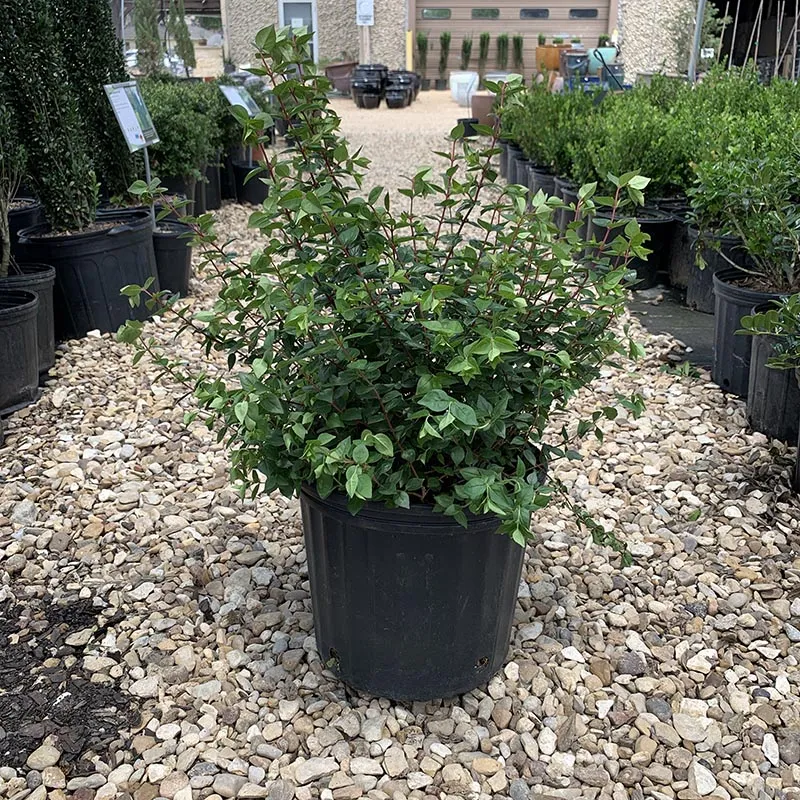
About Rose Creek Abelia
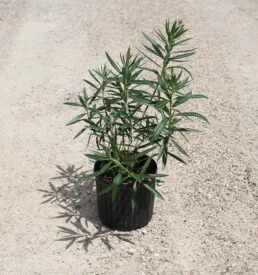
Rose Creek Abelia (Abelia × grandiflora ‘Rose Creek’) is a compact flowering shrub valued for its glossy foliage, long bloom season, tidy mounding habit, and adaptability to residential and commercial landscapes.
It typically develops into a dense, rounded plant that stays smaller and more controlled than many traditional Abelia varieties. White to pale pink tubular flowers appear through much of the warm season and can attract pollinators.
The foliage is also an important ornamental feature. New growth may show reddish or bronze tones before maturing to glossy green, while cooler weather can bring additional bronze or purple coloration.
Outdoor Warehouse Supply stocks Rose Creek Abelia year-round in 3-gallon containers.
| Plant Details | Specifications |
|---|---|
| Common Name | Rose Creek Abelia |
| Botanical Name | Abelia × grandiflora ‘Rose Creek’ |
| Plant Type | Compact flowering shrub |
| Stocked Size | 3 Gallon |
| Availability | Stocked year-round |
| USDA Hardiness Zones | Generally Zones 6–9 |
| Typical Mature Height | Approximately 2–3 feet |
| Typical Mature Spread | Approximately 3–4 feet |
| Spacing | Typically 3–4 feet apart |
| Growth Habit | Compact, dense, mounding |
| Sun Exposure | Full sun to partial shade |
| Water Requirements | Moderate during establishment; relatively low once established |
| Soil Preference | Well-drained soil; adaptable to a range of soils |
| Foliage Color | Glossy green with bronze to reddish seasonal tones |
| Flower Color | White to pale pink |
| Bloom Season | Primarily late spring through fall |
| Pollinator Value | Attractive to bees, butterflies, and other pollinators |
| Common Uses | Foundation beds, borders, low hedges, mass plantings, commercial landscapes, and mixed shrub beds |
Exact mature size and foliage coloration can vary with sunlight, climate, pruning, and growing conditions.
Common Names Associated with Rose Creek Abelia
Customers may search for this plant under several names, including:
- Rose Creek Abelia
- Abelia Rose Creek
- Rose Creek Glossy Abelia
- Compact Abelia
- Dwarf Abelia
- Abelia × grandiflora ‘Rose Creek’
The correct botanical name is Abelia × grandiflora ‘Rose Creek’.
Growth Habit & Mature Size
Rose Creek Abelia develops into a dense, rounded to mounding shrub.
It typically reaches approximately 2–3 feet tall and 3–4 feet wide.
Its compact form makes it useful where customers want a flowering shrub that will not become excessively large.
It works especially well in foundation beds, along walkways, in commercial landscapes, and as a low informal hedge.
Plant Spacing & Common Planting Patterns
Spacing approximately 3–4 feet apart works well for most installations.
Closer spacing can create a fuller hedge or mass planting, while wider spacing allows each plant to maintain a more individual rounded form.
Common planting uses include:
- Foundation beds
- Low hedges
- Residential borders
- Commercial landscapes
- Entryway plantings
- Mass shrub beds
- Mixed perennial and shrub beds
- Walkway borders
- Pollinator gardens
Sun, Soil & Water Requirements
Rose Creek Abelia performs best in full sun to partial shade.
Full sun generally encourages denser growth, stronger flowering, and more pronounced foliage color.
The plant is adaptable to a range of soils but performs best in well-drained soil.
Regular irrigation is important during establishment.
Once established, Rose Creek Abelia develops relatively good drought tolerance and can handle periods of dry weather, although supplemental irrigation during prolonged North Texas heat helps maintain flowering and foliage quality.
Is Rose Creek Abelia Evergreen or Deciduous?
Rose Creek Abelia is generally considered evergreen to semi-evergreen in warmer climates.
In Dallas–Fort Worth, winter behavior can vary.
During mild winters, plants may retain much of their foliage. Colder weather and hard freezes can cause partial leaf drop or temporary winter damage.
Established plants typically recover with fresh spring growth.
Growth Rate & Lifespan
Rose Creek Abelia has a moderate growth rate.
Its naturally compact habit means it does not usually require heavy pruning to remain manageable.
With proper drainage, sunlight, and normal landscape care, Abelia can remain attractive in the landscape for many years.
Foliage & Seasonal Interest
The foliage is one of Rose Creek Abelia’s strongest features.
Leaves are typically small, glossy, and green, while fresh growth may emerge with bronze or reddish tones.
Cooler temperatures can bring additional bronze, burgundy, or purple coloration depending on weather and growing conditions.
This provides year-round or near-year-round visual interest beyond the flowering season.
Flowers & Seasonal Interest
Rose Creek Abelia produces small tubular flowers, generally white to pale pink.
Flowering commonly begins in late spring and can continue through summer and into fall.
The long bloom period makes it especially useful in landscapes where customers want a shrub that provides color for more than a short seasonal window.
Rose Creek Abelia for Pollinator Gardens
The tubular flowers can attract:
- Bees
- Butterflies
- Other beneficial pollinating insects
Because the shrub can flower over an extended warm-season period, it can provide a useful nectar source in mixed pollinator landscapes.
It pairs well with:
- Salvia
- Coreopsis
- Echinacea
- Gaura
- Pink Muhly Grass
- Liriope
- Other compact flowering shrubs
Rose Creek Abelia for Low Hedges & Borders
Rose Creek is especially useful for lower landscape structure.
Its dense, compact form works well for:
- Low informal hedges
- Foundation borders
- Walkway edges
- Commercial entry beds
- Repeated shrub plantings
Unlike larger Abelia varieties, Rose Creek generally maintains a more manageable size without frequent aggressive pruning.
Pruning & Seasonal Care
Rose Creek Abelia generally requires little pruning.
Light trimming can be used to maintain shape or remove uneven growth.
More substantial pruning, if needed, is usually best performed in late winter or early spring before strong new growth begins.
Dead, damaged, or freeze-affected branches can also be removed after winter.
Because the plant naturally forms a dense mound, excessive shearing is usually unnecessary.
Pros & Cons of Rose Creek Abelia
| Pros | Cons |
|---|---|
| Compact, manageable mature size | Can lose foliage during colder winters |
| Long flowering season | Hard freezes may cause temporary damage |
| Attractive glossy foliage | Too much shade can reduce flowering |
| Good heat tolerance | Poor drainage can cause decline |
| Relatively drought tolerant once established | May need occasional shaping |
| Excellent for low hedges and borders | Mature width requires adequate spacing |
| Pollinator-friendly flowers | Winter appearance varies with weather |
| Stocked year-round in 3-gallon containers | Flower display is more subtle than some larger-bloom shrubs |
Rose Creek Abelia in Dallas–Fort Worth Landscapes
Rose Creek Abelia is very well suited to Dallas–Fort Worth because it combines heat tolerance, compact growth, long-season flowering, and relatively low maintenance requirements.
It works especially well in foundation beds, low hedges, commercial landscapes, mixed shrub borders, and areas where a smaller flowering shrub is preferred.
The main local considerations are good drainage and occasional winter cold damage.
Outdoor Warehouse Supply stocks Rose Creek Abelia year-round in 3-gallon containers.
Customers can contact our Plano or Lewisville sales staff for current quantities.
Industry Contractor & Wholesale Pricing
Outdoor Warehouse Supply offers industry contractor and wholesale pricing for qualifying landscape professionals, builders, property managers, commercial customers, and other industry buyers.
Contractors can source Rose Creek Abelia alongside other shrubs, ornamental grasses, groundcovers, perennials, trees, soils, mulch, decorative stone, and landscape materials throughout Dallas–Fort Worth and North Texas.
Contact our Plano or Lewisville locations for current 3-gallon inventory and contractor pricing.
Frequently Asked Questions
What is the botanical name for Rose Creek Abelia?
The botanical name is Abelia × grandiflora ‘Rose Creek’.
What size Rose Creek Abelia does Outdoor Warehouse Supply carry?
Outdoor Warehouse Supply stocks Rose Creek Abelia in 3-gallon containers.
Does Outdoor Warehouse Supply stock Rose Creek Abelia year-round?
Yes.
Rose Creek Abelia is stocked year-round, with current quantities depending on inventory.
How big does Rose Creek Abelia get?
It typically reaches approximately 2–3 feet tall and 3–4 feet wide.
How far apart should Rose Creek Abelia be planted?
Approximately 3–4 feet apart works well for most installations.
Closer spacing can create a fuller hedge effect.
Does Rose Creek Abelia need full sun?
It performs well in full sun to partial shade.
Full sun generally encourages the strongest flowering and denser growth.
Is Rose Creek Abelia drought tolerant?
Yes.
Once established, it develops relatively good drought tolerance, although supplemental irrigation during extended summer heat helps maintain plant quality.
Is Rose Creek Abelia evergreen?
It is generally evergreen to semi-evergreen.
In Dallas–Fort Worth, colder winters may cause partial leaf drop or temporary foliage damage.
When does Rose Creek Abelia bloom?
It typically flowers from late spring through summer and into fall.
What color are Rose Creek Abelia flowers?
The flowers are generally white to pale pink.
Does Rose Creek Abelia attract butterflies?
Yes.
Its flowers can attract butterflies, bees, and other pollinators.
Does Rose Creek Abelia need pruning?
Usually only light pruning is needed.
Its naturally compact growth habit keeps it relatively manageable.
Is Rose Creek Abelia good for hedges?
Yes.
It works very well for low informal hedges and repeated border plantings.
Is Rose Creek Abelia good for North Texas?
Yes.
Its heat tolerance, manageable mature size, long flowering period, and adaptability make it a strong choice for Dallas–Fort Worth landscapes.