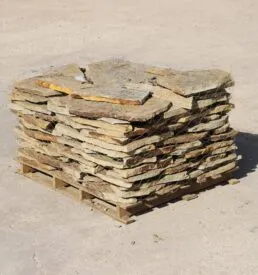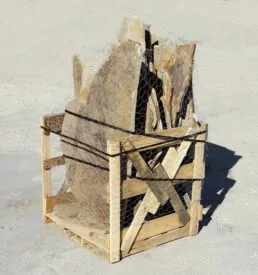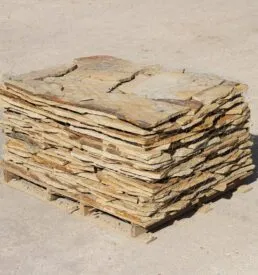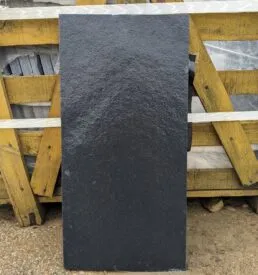
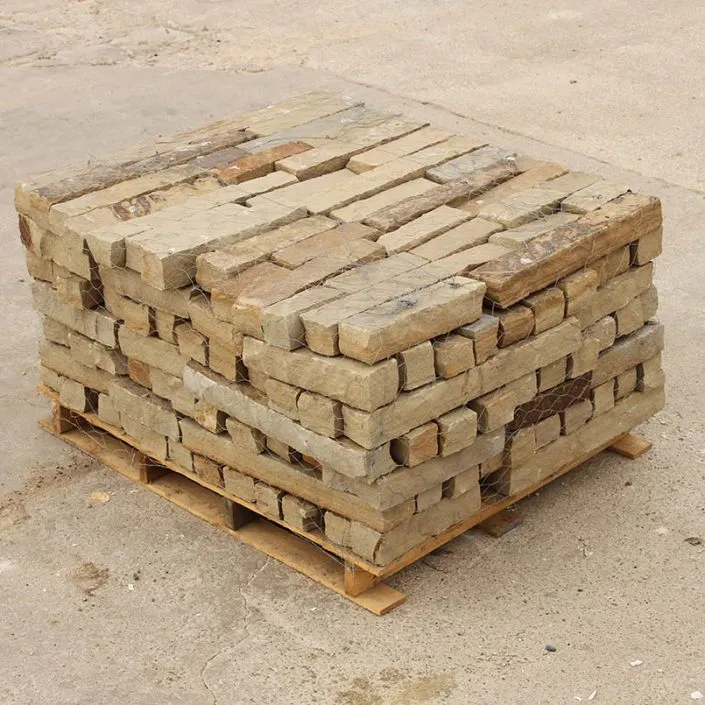
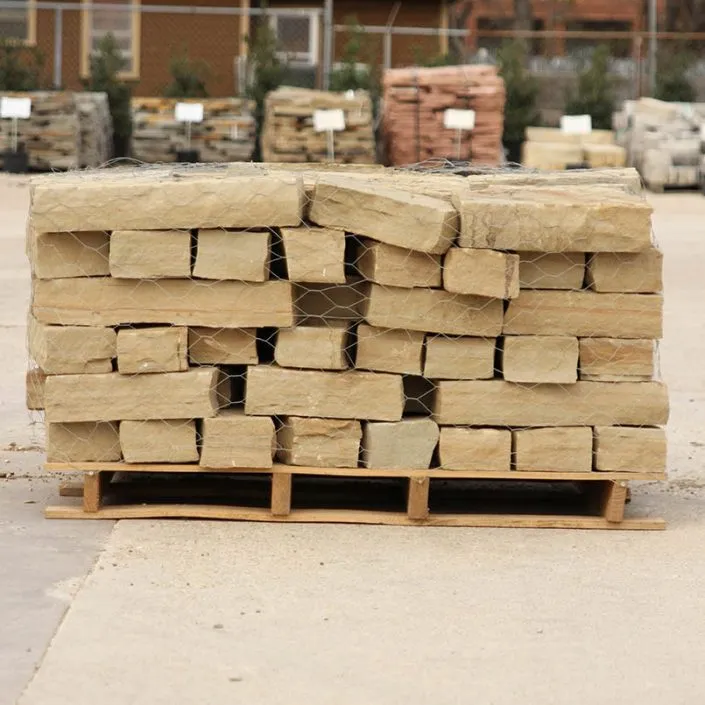
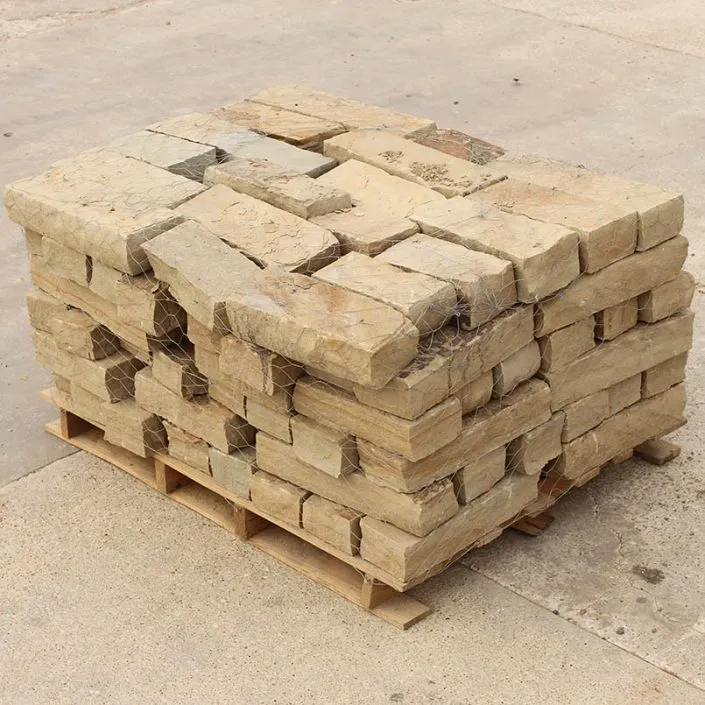
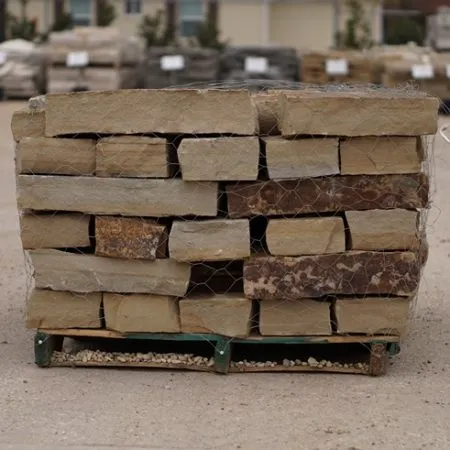
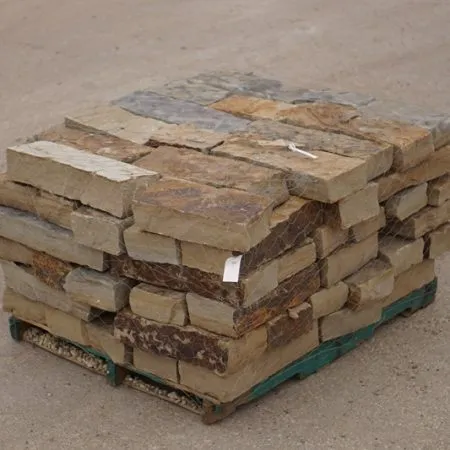
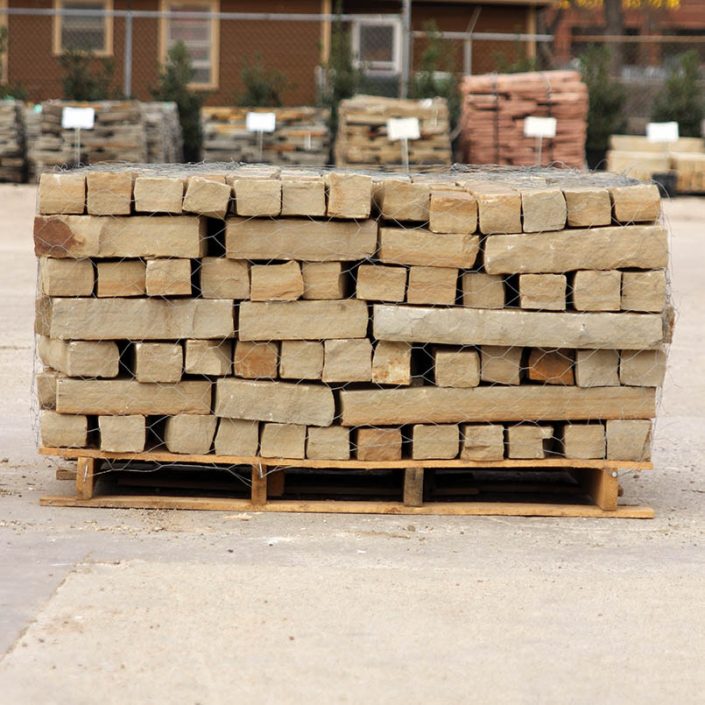

Absolutely. This page needs to explain the sizing more carefully than the limestone pages because Oklahoma Brown Chop is measured differently. The important customer takeaway is that all three products are approximately 4″ tall, while the second measurement—4″, 6″, or 8″—refers to the stone’s width/depth. And unlike the previous stones, all four primary sides retain a natural chopped finish rather than having sawn top and bottom beds.
Oklahoma Brown Chop Stone – 4×4″, 4×6″ & 4×8″
About Oklahoma Brown Chop Stone
Oklahoma Brown Chop Stone is a natural Oklahoma sandstone building stone known for its warm earth-tone coloration, naturally textured surfaces, and rustic chopped appearance.
Unlike chop stones with sawn top and bottom beds, Oklahoma Brown Chop maintains a natural chopped finish on all four primary sides. This preserves more of the stone’s original texture and gives finished walls a distinctly natural, handcrafted appearance.
Outdoor Warehouse Supply carries Oklahoma Brown Chop Stone in three sizes:
- 4×4″
- 4×6″
- 4×8″
An important distinction is how these dimensions are described. Oklahoma Brown Chop Stone maintains an approximately 4″ course height, while the second measurement represents the approximate front-to-back width/depth of the stone.
Therefore:
| Product | Approximate Height | Approximate Width / Depth |
|---|---|---|
| 4×4″ | 4″ | 4″ |
| 4×6″ | 4″ | 6″ |
| 4×8″ | 4″ | 8″ |
Because the material is naturally chopped rather than manufactured to exact dimensions, customers should expect some give and take in every measurement.
Each size is available on its own pallet.
| Product Details | Specifications |
|---|---|
| Product Name | Oklahoma Brown Chop Stone |
| Stone Type | Natural sandstone |
| Origin | Oklahoma |
| Available Sizes | 4×4″, 4×6″, 4×8″ |
| Typical Course Height | Approximately 4″ |
| Available Widths / Depths | Approximately 4″, 6″, or 8″ |
| Stone Finish | Natural chop on all four primary sides |
| Sawn Top & Bottom | No |
| Primary Colors | Brown, tan, buff, rust, cream, reddish-brown and mixed earth tones |
| 4×4″ Coverage | Approximately 90–100 linear ft. per ton |
| 4×6″ Coverage | Approximately 75–80 linear ft. per ton |
| 4×8″ Coverage | Approximately 60 linear ft. per ton |
| Common Uses | Landscape walls, raised beds, borders, columns, masonry features |
| Service Area | Dallas–Fort Worth and North Texas |
Oklahoma Brown Chop Stone is a natural sandstone. Height, depth, length, color, face texture, and exact dimensions naturally vary from piece to piece.
What Is Oklahoma Brown Chop Stone?
Oklahoma Brown Chop Stone is a natural sandstone shaped into wall-stone pieces while intentionally retaining a rougher chopped finish.
Sandstone is a sedimentary rock composed primarily of sand-sized mineral grains that have been naturally compacted and cemented together over geologic time.
That formation gives Oklahoma sandstone its recognizable:
- Layering
- Earth-tone coloration
- Natural cleft character
- Mineral variation
- Rustic texture
The chopped format makes it useful for masonry and landscape walls while preserving substantially more natural texture than highly fabricated dimensional stone.
Understanding Oklahoma Chop Stone Sizes
Oklahoma Chop is sized differently from some of the limestone chop products carried by Outdoor Warehouse Supply.
The first measurement remains approximately 4 inches, representing the course height.
The second measurement identifies the approximate width/depth.
4×4″ Oklahoma Brown Chop
Approximately:
4″ tall × 4″ wide/deep
Approximate coverage:
90–100 linear feet per ton
The 4×4″ provides the narrowest stone profile and works well for:
- Smaller landscape walls
- Garden borders
- Raised planting beds
- Decorative masonry
- Applications where a narrower wall stone is preferred
4×6″ Oklahoma Brown Chop
Approximately:
4″ tall × 6″ wide/deep
Approximate coverage:
75–80 linear feet per ton
The additional depth creates a more substantial stone and works well for:
- Landscape walls
- Raised beds
- Columns
- Outdoor living features
- General masonry installations
4×8″ Oklahoma Brown Chop
Approximately:
4″ tall × 8″ wide/deep
Approximate coverage:
About 60 linear feet per ton
The 4×8″ provides the greatest depth of the three sizes and creates a heavier, more substantial stone profile.
Common applications include:
- Larger landscape walls
- Broad masonry features
- Columns
- Heavier wall construction
- Architectural landscape elements
Natural Chop on All Four Sides
One of the biggest differences between Oklahoma Brown Chop and many dimensional limestone products is the finish.
Oklahoma Brown is naturally chopped on all four primary sides.
There are no intentionally sawn top and bottom bedding surfaces.
That means installers should expect:
- Natural surface irregularity
- Variations in top and bottom beds
- More fitting during installation
- Greater mortar adjustment
- Rustic exposed faces
- More stone-to-stone dimensional variation
The result is a more naturally textured finished wall.
Oklahoma Brown vs. Sawn-Bed Chop Stone
| Oklahoma Brown Chop | Sawn-Bed Chop Stone |
|---|---|
| Natural chop top and bottom | Sawn top and bottom |
| Natural chop front and back | Natural chop front and back |
| More bedding variation | Flatter bedding surfaces |
| More fitting may be necessary | Easier course leveling |
| Strong rustic character | More controlled masonry appearance |
| Greater stone-to-stone variation | More dimensional consistency |
Neither finish is universally better. They simply produce different installation experiences and finished aesthetics.
Oklahoma Brown Sandstone Color & Appearance
Oklahoma Brown Chop Stone is known for a broad warm color palette.
Individual stones may display:
- Medium brown
- Light brown
- Tan
- Buff
- Cream
- Rust
- Reddish-brown
- Golden-brown
- Occasional gray or darker mineral tones
A single stone can also show multiple colors.
The finished appearance is therefore intentionally varied rather than uniform.
Natural Layers & Mineral Character
Sandstone forms through the accumulation and cementation of mineral grains, so visible layering and mineral variation are normal characteristics.
Customers may notice:
- Color bands
- Natural sedimentary layers
- Mineral streaking
- Texture changes
- Small inclusions
- Natural surface irregularities
These characteristics are part of genuine Oklahoma sandstone and contribute to its rustic appearance.
Does Oklahoma Brown Change Color When Wet?
Yes.
Moisture can temporarily deepen many of the stone’s natural colors.
When wet, customers may notice stronger:
- Brown
- Rust
- Red
- Golden
- Dark mineral tones
After the stone dries, it generally returns to its lighter natural appearance.
Approximate Coverage by Size
| Oklahoma Brown Size | Approximate Coverage Per Ton |
|---|---|
| 4×4″ | 90–100 linear ft. |
| 4×6″ | 75–80 linear ft. |
| 4×8″ | About 60 linear ft. |
Coverage should always be considered approximate.
Actual linear footage will vary with:
- Individual stone dimensions
- Mortar-joint width
- Natural chop variation
- Cuts
- Waste
- Corners
- Installation technique
- Wall design
Why Does Coverage Decrease as Stone Width Increases?
Although all three products maintain an approximately 4″ course height, the stones become larger and heavier as the front-to-back dimension increases.
More stone mass is therefore required for each linear foot of wall.
That is why the approximate coverage decreases from:
90–100 LnFt./ton for 4×4″
to
75–80 LnFt./ton for 4×6″
and approximately
60 LnFt./ton for 4×8″.
Recommended Installation Method
Installation requirements vary depending on whether Oklahoma Brown Chop Stone is being used for a decorative garden wall, raised bed, border, column, or retaining application.
Because this product is naturally chopped on the top and bottom, installers should also anticipate more fitting and leveling than with sawn-bed stone.
1. Plan and Mark the Wall
Establish the:
- Wall location
- Finished height
- Alignment
- Course direction
- Intended wall thickness
Determine whether the wall is decorative or whether it will retain soil or support another load.
Retaining and structural applications may require additional foundation, drainage, setback, or engineering considerations.
2. Prepare a Stable Foundation
Excavate sufficiently below finished grade to establish a stable wall foundation and allow part of the first course to sit below grade.
A properly compacted crushed-stone base can provide a firm and well-draining foundation.
Where appropriate, a bedding layer may assist with final adjustments.
The wall should begin on a stable, compacted base rather than loose native soil.
3. Establish the First Course
For a typical landscape-wall installation, OWS generally recommends burying approximately half of the first course to help anchor the wall and improve stability.
Because Oklahoma Brown has naturally chopped bedding surfaces, installers should select suitable pieces and carefully level the initial course.
The first course establishes the alignment for the entire wall, so extra time spent here can make later courses easier.
4. Build with Appropriate Masonry Mortar
For a standard mortared installation, continue upward using a mortar appropriate for the intended masonry application.
Mortar can help compensate for some natural variations in the stone’s bedding surfaces.
Installers should also stagger vertical joints rather than creating continuous seams from one course to the next.
5. Fit Natural Stone as Needed
Because there are no sawn top and bottom surfaces, installation may involve:
- Sorting stone
- Rotating individual pieces
- Adjusting mortar beds
- Minor trimming or fitting
- Selecting complementary pieces
This is a normal part of building with natural chopped sandstone.
6. Provide Proper Drainage for Retaining Applications
Where the wall retains soil, proper drainage becomes especially important.
Depending on the application, construction may include:
- Clean drainage aggregate
- Perforated drain pipe
- Geotextile
- A suitable drainage outlet
- Appropriate setback or batter
Structural and engineered walls should follow the applicable plans, specifications, and local requirements.
Oklahoma Brown Chop Stone for Landscape Walls
Oklahoma Brown is particularly popular for landscape walls because its natural texture works well with:
- Traditional Texas homes
- Rustic landscapes
- Ranch-style properties
- Native landscapes
- Outdoor living areas
- Natural stone patios
Its varied coloration keeps large walls visually interesting without requiring multiple different stone products.
Oklahoma Brown for Raised Beds
The stone is also well suited for permanent raised landscape beds.
Its warm brown, tan, rust, and cream coloration complements:
- Ornamental grasses
- Native plants
- Evergreen shrubs
- Perennials
- Dark mulch
- Decomposed granite
- Other natural stone
Oklahoma Brown for Columns & Masonry Features
Oklahoma Brown Chop Stone can also be incorporated into:
- Entry columns
- Landscape pillars
- Mailbox surrounds
- Outdoor kitchens
- Fire-feature surrounds
- Decorative masonry structures
The choice between 4×4″, 4×6″, and 4×8″ can help determine how substantial the finished feature appears.
Oklahoma Brown Chop vs. Oklahoma Brown Flagstone
Although they come from the same broader sandstone family, chop stone and flagstone are processed for different applications.
| Oklahoma Brown Chop Stone | Oklahoma Brown Flagstone |
|---|---|
| Rectangular wall-stone format | Broad flat pieces |
| Primarily vertical masonry | Primarily horizontal surfacing |
| Used for walls and raised beds | Used for patios and walkways |
| Various wall depths | Various slab thicknesses |
| Naturally chopped faces | Natural cleft surfaces |
Customers building both a patio and surrounding walls can use the two products together to create a coordinated Oklahoma sandstone landscape.
Oklahoma Brown vs. Lueders Limestone Chop
| Oklahoma Brown Sandstone | Lueders Limestone |
|---|---|
| Sandstone | Limestone |
| Warm brown/rust palette | Varies from cream to charcoal |
| Natural chop on all four sides | Many Lueders chop products have sawn beds |
| More rustic bedding surfaces | More consistent sawn bedding |
| Strong sedimentary texture | Limestone mineral/fossil character |
| Rustic natural appearance | Refined to rustic depending variety |
Should Oklahoma Brown Sandstone Be Sealed?
Sealing is not always required, but sandstone is naturally porous.
Using a quality penetrating natural stone sealer approved for sandstone can help reduce:
- Moisture absorption
- Staining
- Dirt penetration
- Surface discoloration
A compatible sealer may also help preserve the stone’s appearance over time.
Some sealers can deepen the natural browns and rust tones, so the product should always be tested on a small inconspicuous section before treating the entire installation.
Sealing does not replace proper installation or drainage.
Natural Variation
Natural variation should be expected in:
- Height
- Width/depth
- Length
- Bedding surfaces
- Color
- Surface texture
- Mineral patterns
- Layering
- Edge shape
The listed 4×4″, 4×6″, and 4×8″ dimensions describe the general product sizing rather than exact manufactured dimensions.
This natural give-and-take is part of the appeal of Oklahoma Chop Stone.
Pros & Cons of Oklahoma Brown Chop Stone
| Pros | Cons |
|---|---|
| Natural Oklahoma sandstone | More dimensional variation than sawn-bed stone |
| Rich brown, tan and rust coloration | Natural beds require additional fitting |
| Natural chop on all four sides | Installation may take more time |
| Available in three wall depths | Heavy material |
| Strong rustic appearance | Mortared construction requires proper technique |
| Excellent coordination with Oklahoma flagstone | Porous sandstone can absorb moisture |
| Good for walls, beds and columns | Coverage varies naturally |
| Multiple widths for different wall applications | Exact dimensions are not manufactured tolerances |
Oklahoma Brown Chop Stone in Dallas–Fort Worth Landscapes
Oklahoma Brown Chop Stone is a particularly strong fit for Dallas–Fort Worth landscapes because its warm sandstone palette complements many of the natural materials already used throughout North Texas.
It pairs especially well with:
- Oklahoma Brown Flagstone
- Decomposed granite
- River rock
- Native plants
- Ornamental grasses
- Texas-style architecture
- Rustic outdoor living spaces
Outdoor Warehouse Supply carries Oklahoma Brown Chop Stone in 4×4″, 4×6″, and 4×8″ sizes through our Plano and Lewisville locations.
Customers can contact OWS sales staff for current pallet quantities and availability.
Industry Contractor & Wholesale Pricing
Outdoor Warehouse Supply offers industry contractor and wholesale pricing for qualifying masons, landscape contractors, builders, hardscape installers, property managers, commercial customers, and other industry buyers.
Contractors can source Oklahoma Brown Chop Stone alongside Oklahoma Flagstone, limestone chop, slabs, boulders, aggregates, soils, mulch, plants, edging, and other landscape materials for projects throughout Dallas–Fort Worth and North Texas.
Contact our Plano or Lewisville sales staff for current availability and contractor pricing.
Frequently Asked Questions
What is Oklahoma Brown Chop Stone?
Oklahoma Brown Chop Stone is a natural Oklahoma sandstone wall stone with naturally chopped surfaces and warm brown, tan, rust, cream, and earth-tone coloration.
Is Oklahoma Brown Chop Stone limestone?
No.
It is sandstone, making it geologically different from Austin and Lueders limestone products.
What sizes does Outdoor Warehouse Supply carry?
OWS carries:
- 4×4″
- 4×6″
- 4×8″
How are Oklahoma Chop Stone sizes measured?
All three sizes are approximately 4 inches tall.
The second number represents the approximate front-to-back width/depth:
- 4×4″ = about 4″ tall × 4″ deep
- 4×6″ = about 4″ tall × 6″ deep
- 4×8″ = about 4″ tall × 8″ deep
Are the dimensions exact?
No.
This is natural chop stone, so some give and take in height, depth, length, and face shape should be expected.
Does Oklahoma Brown have sawn top and bottom surfaces?
No.
Unlike several of OWS’s limestone chop products, Oklahoma Brown is naturally chopped on all four primary sides.
Why does natural chop matter?
Natural chop preserves more of the stone’s natural texture but creates greater dimensional variation and may require more fitting during installation.
What colors are Oklahoma Brown Chop Stone?
Typical colors include brown, tan, buff, cream, rust, reddish-brown, and golden earth tones.
Does Oklahoma Brown change color when wet?
Yes.
Water can temporarily deepen the brown, rust, red, and gold tones.
How much does 4×4″ Oklahoma Brown Chop cover?
Approximately 90–100 linear feet per ton.
How much does 4×6″ Oklahoma Brown Chop cover?
Approximately 75–80 linear feet per ton.
How much does 4×8″ Oklahoma Brown Chop cover?
Approximately 60 linear feet per ton.
Why does the larger stone cover fewer linear feet per ton?
Larger front-to-back dimensions mean each piece contains more stone mass, so more weight is required for each linear foot of wall.
Are the coverage numbers guaranteed?
No.
Coverage varies with individual stone dimensions, mortar joints, cuts, waste, corners, and installation style.
Which Oklahoma Brown size should I use?
The best choice depends on wall design and desired thickness.
The 4×4″ creates the narrowest profile, while 4×6″ and 4×8″ provide progressively greater wall depth and visual mass.
Should the first course be buried?
For a typical landscape-wall application, OWS generally recommends burying approximately half of the first course to help anchor the wall.
Should Oklahoma Brown Chop Stone be mortared?
For a standard mortared wall installation, yes.
Use a masonry mortar appropriate for the intended application.
Is Oklahoma Brown harder to install than sawn-bed chop stone?
It can require more fitting because the top and bottom retain natural chopped surfaces rather than being sawn flat.
Experienced installers account for this with stone selection, placement, and mortar-bed adjustment.
Does a retaining wall need drainage?
Retaining applications generally require proper drainage planning that may include drainage aggregate, perforated pipe, geotextile, and a suitable outlet.
Is Oklahoma Brown good for raised beds?
Yes.
Its warm natural coloration and wall-stone format make it particularly attractive for permanent raised landscape beds.
Can Oklahoma Brown Chop Stone be used for columns?
Yes.
It can be incorporated into columns, pillars, mailbox surrounds, outdoor living features, and other masonry work.
Is Oklahoma Brown the same material as Oklahoma Brown Flagstone?
They are both Oklahoma sandstone products, but they are processed into different formats.
Chop Stone is primarily used for walls, while flagstone is generally used for patios, walkways, and other horizontal surfaces.
Should Oklahoma Brown Sandstone be sealed?
It does not always require sealing, but a quality penetrating natural stone sealer approved for sandstone can help reduce moisture absorption and staining.
Test any sealer first because it may deepen the natural color.
Is Oklahoma Brown Chop Stone good for North Texas?
Yes.
Its warm earth tones, rustic texture, and compatibility with Oklahoma Flagstone make it a very popular style for Dallas–Fort Worth landscapes.