
About Austin White Limestone Chop Stone
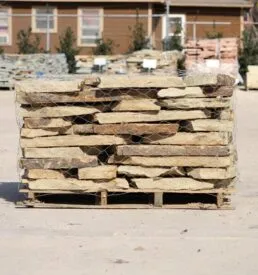
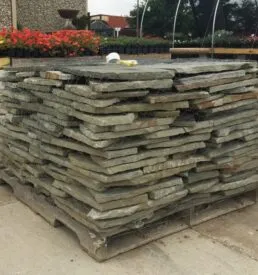
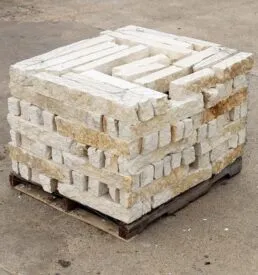
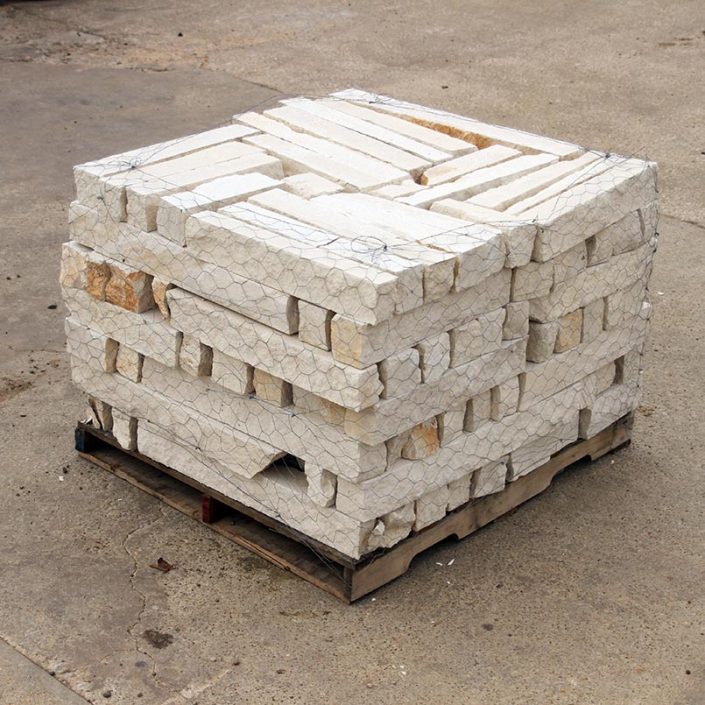
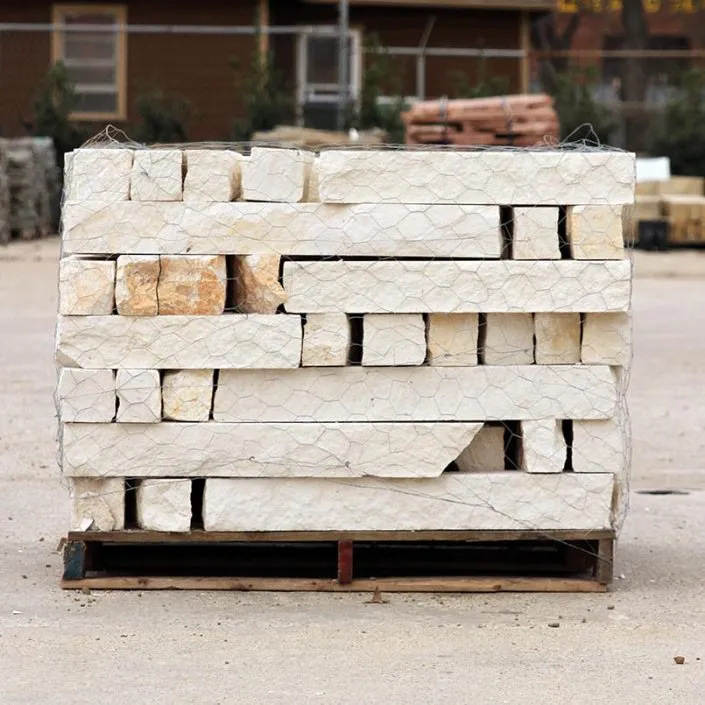
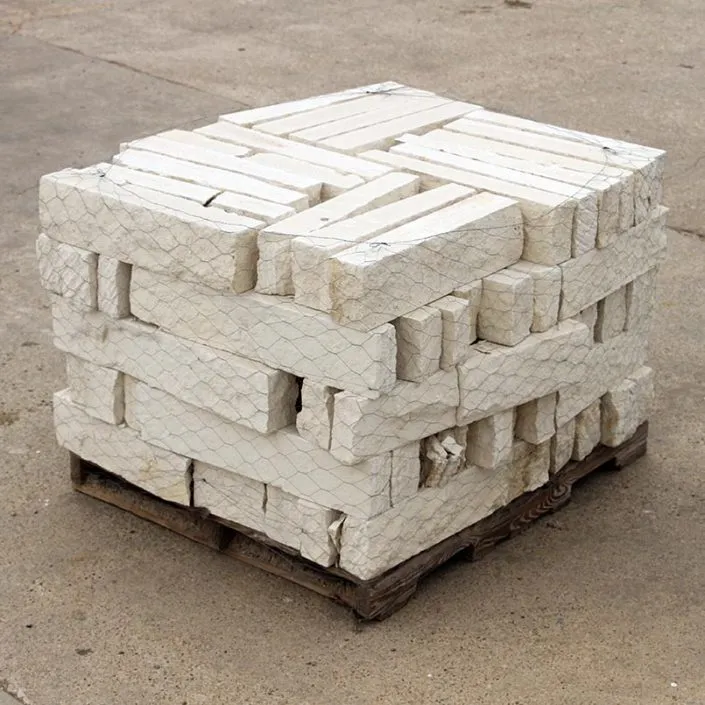
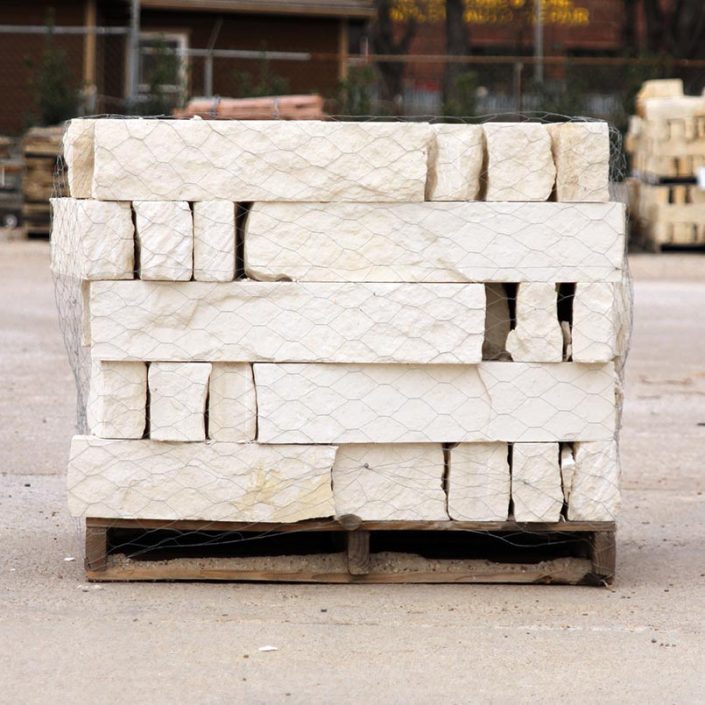
Austin White Limestone Chop Stone is a natural Texas building stone sourced from the North Austin region, known for its light cream-to-white appearance, clean horizontal bedding surfaces, and natural chopped faces.
Each piece features:
- Sawn top
- Sawn bottom
- Natural chopped face on the front
- Natural chopped face on the back
This combination gives installers more consistent horizontal courses while preserving the natural texture and character of real limestone.
Outdoor Warehouse Supply carries Austin White Limestone Chop Stone in:
- 4″
- 6″
- 8″
Each size is available on its own pallet, and OWS also carries premix pallets containing all three sizes for customers who want a more varied wall pattern.
Each pallet weighs approximately 2 tons.
| Product Details | Specifications |
|---|---|
| Product Name | Austin White Limestone Chop Stone |
| Origin | North Austin region |
| Available Sizes | 4″, 6″, 8″ |
| Stone Finish | Sawn top & bottom, natural chopped front & back |
| Approximate Front-to-Back Thickness | Roughly 4″ |
| Material Type | Natural limestone building stone |
| Primary Mineral | Calcite / calcium carbonate |
| Secondary Natural Components | Silica, chert, clay, silt, sand, occasional fossil markings |
| Primary Color | White to light cream |
| Natural Color Variation | Occasional tan, rust, mineral streaking, and fossil character |
| Pallet Options | Single-size pallets or premix pallets |
| Approximate Pallet Weight | About 2 tons |
| 4″ Coverage | Approximately 90–100 linear ft. per ton |
| 6″ Coverage | Approximately 75–80 linear ft. per ton |
| 8″ Coverage | Approximately 60 linear ft. per ton |
| Common Uses | Landscape walls, raised beds, borders, columns, masonry accents |
| Service Area | Dallas–Fort Worth and North Texas |
Austin White Limestone is a natural stone product. Color, thickness, face texture, mineral content, fossil markings, and dimensions will vary from piece to piece.
What Is Austin White Limestone Chop Stone?
Austin White Limestone Chop Stone is a natural limestone wall stone cut into relatively rectangular pieces for more consistent masonry installation.
The top and bottom are sawn to provide flatter bedding surfaces, while the front and back maintain a natural chopped appearance.
That gives the material a balance of:
- Cleaner course alignment
- Natural stone texture
- Easier stacking
- Rustic limestone character
- Regional Texas appearance
It is especially useful for projects where customers want a lighter, cleaner wall color than darker or more heavily rust-toned stone.
North Austin Limestone
Austin White Limestone is sourced from the North Austin region of Texas.
This area is known for naturally occurring limestone formations that produce building stone in a range of white, cream, tan, and warmer mineral tones.
Austin White is generally selected for its lighter appearance, making it a popular choice for:
- Texas-style homes
- Light-colored masonry
- Landscape walls
- Columns
- Raised beds
- Commercial entrances
What Is Austin White Limestone Made Of?
Austin White Limestone is composed primarily of calcite, or calcium carbonate.
It may also contain secondary natural components such as:
- Silica
- Chert
- Clay
- Silt
- Sand
- Occasional fossil markings
These secondary materials can influence:
- Color
- Texture
- Mineral streaking
- Fossil visibility
- Natural surface character
Because limestone forms naturally, no two pieces will be exactly alike.
Austin White Limestone Color & Appearance
The general appearance is:
- White
- Off-white
- Light cream
- Pale beige
- Soft tan
Some individual pieces may also contain:
- Light rust-colored streaking
- Mineral bands
- Fossil markings
- Slightly darker natural inclusions
The overall look remains significantly lighter than more heavily rust-toned limestone varieties.
Austin White Limestone vs. Austin Nicotine Limestone
Austin White Limestone and Austin Nicotine Limestone come from the same general regional stone family, but their appearances can differ considerably.
| Austin White Limestone | Austin Nicotine Limestone |
|---|---|
| Predominantly white to light cream | More pronounced warm and rust tones |
| Cleaner, lighter appearance | Stronger iron-colored streaking |
| Occasional rust or mineral marks | Rust coloration is more visually dominant |
| Bright masonry appearance | Warmer, more weathered appearance |
| More neutral overall palette | More brown, tan and orange influence |
Because both stones come from the same general limestone region, Austin White can occasionally show natural rust streaking or warm mineral coloration.
The difference is that those markings are usually much less dominant in Austin White.
Why Can Austin White Limestone Have Rust Streaks?
Natural limestone is not chemically or visually uniform.
Iron-bearing minerals and other naturally occurring components can create occasional:
- Rust-colored streaks
- Orange-brown areas
- Tan bands
- Mineral spotting
This does not mean the material has changed into Austin Nicotine Limestone.
It simply reflects the natural geology of the region.
Austin White is still selected for its predominantly white-to-cream appearance, but some warmer markings should be expected.
Fossil Markings in Austin Limestone
Austin-area limestone can occasionally contain visible fossil or shell markings.
These may appear as:
- Small shell impressions
- Natural fossil fragments
- Patterned mineral inclusions
They are part of the stone’s natural formation and can add character to individual pieces.
Sawn Top & Bottom with Natural Chop Faces
The top and bottom are sawn, creating flatter horizontal bedding surfaces.
The front and back are naturally chopped, leaving a more textured and irregular stone face.
This combination provides:
- Easier leveling
- More consistent wall courses
- Better mortar contact
- Natural-looking exposed faces
- Less fitting than fully irregular stone
Approximate 4″ Front-to-Back Thickness
Each piece is typically around 4 inches thick from front to back.
Because the front and back are natural chop faces, exact thickness will vary.
Customers should expect:
- Some thinner pieces
- Some thicker pieces
- Variation between opposite faces
- Natural edge irregularity
That give-and-take is normal for natural chop stone.
Available Austin White Chop Stone Sizes
4″ Austin White Limestone Chop Stone
The 4″ size creates a tighter, more detailed wall pattern.
Approximate coverage:
90–100 linear feet per ton
Common uses include:
- Borders
- Smaller landscape walls
- Raised beds
- Detailed masonry
- Fine-scale wall patterns
6″ Austin White Limestone Chop Stone
The 6″ size offers a balanced middle option.
Approximate coverage:
75–80 linear feet per ton
It works well for:
- Landscape walls
- Raised beds
- Columns
- Masonry accents
- General wall construction
8″ Austin White Limestone Chop Stone
The 8″ size produces a larger and more substantial appearance.
Approximate coverage:
About 60 linear feet per ton
It is especially useful for:
- Larger landscape walls
- Bold horizontal courses
- Architectural features
- Projects needing a heavier visual scale
Premix Austin White Limestone Pallets
Outdoor Warehouse Supply also carries premix pallets containing 4″, 6″, and 8″ Austin White Limestone Chop Stone.
Premix pallets allow installers to create:
- Mixed course heights
- Less repetitive patterns
- More visual movement
- More natural wall designs
- Custom masonry layouts
Approximate Coverage by Size
| Stone Size | Approximate Coverage Per Ton |
|---|---|
| 4″ | 90–100 linear ft. |
| 6″ | 75–80 linear ft. |
| 8″ | About 60 linear ft. |
Coverage is approximate.
Actual results vary with:
- Joint width
- Mortar thickness
- Cuts
- Waste
- Natural variation
- Wall design
- Corner conditions
Approximate Pallet Weight
Each pallet weighs approximately 2 tons.
Customers should plan for:
- Suitable truck or trailer capacity
- Appropriate unloading equipment
- Jobsite access
- Safe material handling
Recommended Installation Method
Installation requirements vary depending on whether Austin White Limestone Chop Stone is being used for a decorative wall, raised bed, garden border, column, or retaining application.
1. Plan and Mark the Wall
Use stakes and a string line to establish:
- Wall location
- Finished height
- Alignment
- Course direction
Determine whether the project is decorative or whether it will retain soil.
Retaining or load-bearing walls may require additional drainage, setback, footing preparation, or engineering.
2. Prepare a Stable Foundation
Excavate below grade enough to create a stable foundation and allow part of the first course to be buried.
A compacted crushed-stone base can help provide a firm, well-draining foundation.
Where appropriate, a thin bedding layer can assist with final leveling.
The goal is to begin on a firm, compacted, and level base rather than loose soil.
3. Set the First Course
For a typical landscape-wall installation, OWS generally recommends burying approximately half of the first course to improve stability.
Use larger, flatter pieces where practical and check each stone before continuing upward.
The sawn top and bottom surfaces help make this process more consistent than fully natural stone.
4. Build Upper Courses with Appropriate Mortar
Continue upward using an appropriate masonry mortar for the intended application.
Vertical joints should be staggered rather than continuously aligned.
Natural thickness variation can be adjusted through:
- Stone selection
- Minor fitting
- Mortar-bed thickness
- Course arrangement
5. Retaining-Wall Drainage
If the wall retains soil, drainage becomes especially important.
Depending on the project, proper construction may include:
- Clean drainage stone
- Perforated drain pipe
- Geotextile
- Proper water outlet
- Appropriate wall setback
For taller, structural, or engineered retaining walls, follow the applicable plans and requirements.
6. Finish the Top Course
Choose flatter and visually consistent stones for the upper course where possible.
The wall may be finished with:
- Austin White Chop Stone
- Dedicated cap stone
- Another compatible natural-stone cap
Austin White Limestone for Landscape Walls
Austin White works especially well for:
- Garden walls
- Decorative landscape walls
- Raised beds
- Property borders
- Entry features
- Seat-wall style applications
Its lighter color can make landscape areas feel brighter and more open.
Austin White Limestone for Raised Beds
The stone works well for permanent raised landscape beds and garden walls.
It pairs especially well with:
- Green shrubs
- Ornamental grasses
- Flowering plants
- Dark mulch
- Black steel edging
The white and cream coloration creates strong contrast against planting material.
Austin White Limestone for Columns & Masonry Accents
Its rectangular form makes it useful for:
- Entry columns
- Gate columns
- Mailbox surrounds
- Landscape pillars
- Decorative masonry features
Premix pallets can create a more varied and custom appearance.
Austin White Limestone vs. Autumn Blend Chop Stone
| Austin White Limestone | Autumn Blend Chop Stone |
|---|---|
| Predominantly white to cream | Warmer mixed earth tones |
| Cleaner, lighter appearance | More rustic autumn coloration |
| Occasional rust streaking | Rust and brown tones more noticeable |
| Strong fit for light architecture | Strong fit for warm Texas designs |
| Neutral overall palette | More color variation |
Natural Variation
Customers should expect variation in:
- White and cream tones
- Rust streaking
- Fossil markings
- Surface texture
- Thickness
- Length
- Edge shape
- Mineral inclusions
Even with sawn top and bottom surfaces, this remains natural limestone.
Pros & Cons of Austin White Limestone Chop Stone
| Pros | Cons |
|---|---|
| Bright white-to-cream appearance | Natural color variation occurs |
| Sawn top and bottom aid installation | Occasional rust streaking may appear |
| Natural chopped face | Some fitting may still be required |
| Available in 4″, 6″, and 8″ | Heavy material |
| Premix pallets available | Requires proper masonry installation |
| Texas regional stone | Full pallets require suitable hauling capacity |
| Occasional fossil character | Exact thickness varies |
| Good for walls and columns | Light stone may show dirt more easily |
Austin White Limestone Chop Stone in Dallas–Fort Worth Landscapes
Austin White Limestone Chop Stone is especially well suited to Dallas–Fort Worth projects where customers want a light-colored Texas limestone with a cleaner architectural appearance.
It works well in:
- Residential landscape walls
- Commercial entrances
- Raised beds
- Columns
- Outdoor living areas
- Property borders
- Masonry accents
Its North Austin origin, white-to-cream color, and occasional fossil or mineral character give it a distinctly regional Texas appearance.
Outdoor Warehouse Supply carries Austin White Limestone Chop Stone in 4″, 6″, and 8″ sizes, along with premix pallets containing all three sizes, through our Plano and Lewisville locations.
Each pallet weighs approximately 2 tons.
Industry Contractor & Wholesale Pricing
Outdoor Warehouse Supply offers industry contractor and wholesale pricing for qualifying masons, landscape contractors, builders, hardscape installers, property managers, commercial customers, and other industry buyers.
Contractors can source Austin White Limestone Chop Stone alongside flagstone, slabs, boulders, aggregates, soils, mulch, plants, edging, and other landscape materials throughout Dallas–Fort Worth and North Texas.
Contact our Plano or Lewisville sales staff for current pallet availability and contractor pricing.
Frequently Asked Questions
What is Austin White Limestone Chop Stone?
Austin White Limestone Chop Stone is a natural North Austin-region limestone with sawn top and bottom surfaces and natural chopped faces.
Where does Austin White Limestone come from?
It comes from the North Austin region of Texas.
What is Austin White Limestone made of?
It is composed primarily of calcite, or calcium carbonate, with secondary natural components that may include silica, chert, clay, silt, sand, and fossil material.
What sizes does Outdoor Warehouse Supply carry?
OWS carries:
- 4″
- 6″
- 8″
Premix pallets containing all three sizes are also available.
Is Austin White Limestone actually pure white?
No.
The stone is predominantly white to light cream, but natural variation can include beige, tan, mineral markings, and occasional rust streaking.
Why does Austin White Limestone sometimes have rust streaks?
Natural iron-bearing minerals and regional geological variation can produce occasional rust or orange-brown markings.
Is Austin White Limestone the same as Austin Nicotine Limestone?
No.
Austin Nicotine generally has much stronger rust, tan, and warm coloration, while Austin White remains predominantly white to cream.
Can Austin White still contain warm coloration?
Yes.
Some pieces can show natural rust or warmer mineral streaking, just typically much less than Austin Nicotine.
Does Austin White Limestone contain fossils?
It can.
Occasional fossil or shell markings may naturally appear in the stone.
Is Austin White Limestone sawn?
Yes.
The top and bottom are sawn, while the front and back are naturally chopped.
Why are the top and bottom sawn?
The flatter surfaces help with leveling, mortar contact, stacking, and more consistent wall courses.
How thick is Austin White Limestone Chop Stone?
Each piece is roughly 4 inches from front to back, with natural variation.
Is every piece exactly 4 inches thick?
No.
The natural chopped faces create some give and take in the exact thickness.
How much does a pallet weigh?
Each pallet weighs approximately 2 tons.
How much does 4″ Austin White Chop Stone cover?
Approximately 90–100 linear feet per ton.
How much does 6″ Austin White Chop Stone cover?
Approximately 75–80 linear feet per ton.
How much does 8″ Austin White Chop Stone cover?
Approximately 60 linear feet per ton.
Are those coverage numbers exact?
No.
Coverage varies based on joint width, cuts, mortar thickness, waste, and natural stone variation.
Can I buy a premix pallet?
Yes.
Premix pallets contain 4″, 6″, and 8″ pieces together.
Should the first course be buried?
For a typical landscape-wall installation, OWS generally recommends burying approximately half of the first course for stability.
Should Austin White Limestone Chop Stone be mortared?
For a standard mortared wall installation, yes.
Use an appropriate masonry mortar for the intended application.
Does a retaining wall need drainage?
Retaining applications generally require drainage planning that may include clean stone, perforated pipe, geotextile, and a proper outlet.
Is Austin White Limestone good for raised beds?
Yes.
Its light color and rectangular form make it a strong choice for permanent raised landscape beds.
Can Austin White Limestone be used for columns?
Yes.
It works well for columns, mailbox surrounds, entry features, and other masonry accents.
Should Austin White Limestone be sealed?
Sealing is not always required, but applying a quality natural stone sealer suitable for limestone can help reduce moisture absorption, staining, weathering, and surface discoloration.
A compatible sealer may also help preserve the stone’s appearance and color over time, especially in exposed areas, high-moisture locations, outdoor kitchens, columns, walls, and other installations where the stone may regularly encounter water, soil, or staining materials.
Because sealers can change the appearance of natural stone, customers should always:
- Use a product specifically approved for limestone or natural stone
- Test the sealer on a small inconspicuous area first
- Follow the manufacturer’s application instructions
- Reapply as recommended based on exposure and product type
A sealer can help extend the appearance, color consistency, and overall service life of the stone, but it does not eliminate the need for proper installation, drainage, and maintenance.
Is Austin White Limestone good for North Texas?
Yes.
Its Texas origin, light color, and regional appearance make it especially appropriate for Dallas–Fort Worth architecture and landscapes.